


Part 2 Seven Pointers for Parents (& Teachers!)
Seven Pointers for Parents to Help Your Kid Deal with a Mean Kid
And One Action Your Child Can Take to Go From Hurt to Helper
In the last episode I talked about my experiences, both personally and professionally,
my WHY, that shaped the Pointers I used to help Drew go From Hurt to Helper.
It is my hope that, at the very least, maybe these Pointers will give you a place to start when you sit down to have these conversations with your kid(s).
This seems like a good time for a disclaimer!
Do I have all the answers? Trust me, I do not!
Numbers 3 and 4 below apply to me 24/7! Ha!
Every child, every person, is different, every situation is different, and I know from my professional experience that there is no cookie cutter, one-size-fits-all solution for anything. We’re all too beautifully complex for that.
But what I can hang my hat on at the end of the day is that we got through some very difficult social and emotional situations together using these techniques.
7 Pointers for Parents to Help Your Kid Deal with a Mean Kid
1. Their Hearts Hurt
I discussed scenarios with Drew that might cause a child to have a hurting heart.
I explained that we have no idea what kids are dealing with at home. It could be something as simple as not getting enough rest, to a bigger issue like abuse.
I was always very open and honest with Drew about the world, and he knew I advocated for kids who were abused and neglected. Did I share the gory details?
Of course not, but I didn’t sugar coat tragedy, either. And that is exactly what I saw, tragedy, the loss of childhoods and sometimes even the loss of life.
Hurt people hurt people.
To make this easy to remember I told Drew that happy hearts don’t hurt others.
2. There’s No Such Thing As a Bad Kid
Drew argued with me on this one. You’re probably thinking, he’s right!
He insisted there really were bad kids- he had seen them.
I assured him that there were hurt kids, hungry kids, scared kids, all kinds of kids,
but there were no bad kids. I told him that sometimes behavior is bad, but that does not make the child bad. Many times, those behaviors are cries for help, or signs that a child does not know what to do with all the big feelings they’re carrying. At the very least, those behaviors show us their hearts are hurting, which was really all he needed to know.
And I reminded him of times he made mistakes that easily could have been viewed as “bad,” and I asked him to imagine people calling him a bad kid because of something he had done. Yikes. He agreed that didn’t seem fair. And I assured him it wasn’t.
This leads to Numbers 3 and 4.
3. Mistakes Become Lessons
This is a big one- so big, in fact, it continues throughout our lifetimes. Mistakes are learning opportunities. Of course, not every mistake turns into a lesson right away.
Sometimes repeated mistakes happen because self-control is still developing.
We have to remember that we’re dealing with young children. They are not mini adults. And sometimes when repeated mistakes don’t make a Lesson Impression
and a child is consciously making poor choices, it can be helpful to refer back to Numbers 1 and 2.
Our Declaration at ELF365 speaks to this.
No one is perfect. We all have strengths and weaknesses.
We all make mistakes. Mistakes become lessons.
We are always learning so we must always be kind.
Speaking of everyone having strengths and weaknesses…
4. We Are All Naughty and Nice
This one doesn’t need much explanation; it speaks for itself. From holiday carols to school assemblies, Norm (society) has engrained in our brains that we are either or, when in fact, we are both and. And no, it is not subjective. It is a fact. We are all
human. Remember Number 3?
5. Sad Can Look Like Mad & Hurt Can Look Like Mean
As mentioned in Number 1, people who are sad or hurt often act mad or mean.
But WHY? The most straightforward answer is- safety. Whether it is emotional safety or physical safety, when people feel unsafe, they often click into survival mode. When that happens, they’re much more likely to protect themselves than express themselves.
It’s worth mentioning here, too, that anger is the second stage in processing grief.
Grief may not be something that comes to mind when thinking about why a child
might be mean, but grief is a word used to describe deep loss. Sometimes the
heartache described in Number 1 becomes too much for a little one to carry,
yet we’re expecting them to process complicated emotional grief and go on about
their day and be “good.”
Even adults struggle with this- so understanding and empathy are simply imperative.
6. Trash the Trash Talk
I always ran to my Grandad when something was wrong because he listened.
He gave me his time and attention, and that made me feel valued, important and loved.
And it did not matter how hurt my feelings were or how angry I was…he ALWAYS responded with objectivity. This was such a gift because it gave me a neutral space to process my feelings. Never once did I walk away feeling even more hurt or angry because he trashed the villain in my story or got all worked up with me.
Because of this, it felt safe to go to him with anything.
You may or may not be surprised how often kids are simply repeating the negative things they hear from the adults in their lives. We may think our kids never listen,
but the truth is, they are listening…to everything! Whether you’re trashing a neighbor, a politician, a teacher, a coach or even a sports team- they hear you. And they love you. And because they love you, they will repeat what you say.
I call that The Parrot Promise! Your kid will parrot you!
So, trash the trash talk! Just be there and be fair. Listen and lead with love.
7. Don’t Be the Victim
Before you toss that match and I burst into flames, let me explain. My goal was to
empower Drew and move him From Hurt to Helper. I made it very clear that while
Numbers 1-6 above shared reasons someone might be mean, these were never
excuses. There is a difference. And while it makes our hearts hurt when someone is mean to us, we don’t have to claim the victim role. What can we do instead?
What action can we take?
An action that’s not doing the same thing back that the mean kid did to us.
Do you smell something burning? Lol
NOW! On to….
One Action Your Child Can Take to Go
From Hurt to Helper
I encouraged Drew to reach out to the next child who was mean to him.
I suggested that when someone said or did something not nice to ask,
“Is everything OK?
“Why are you being so mean?
Can I help you with something?”
The next day, of course, someone was mean and Drew mustered up the courage to approach them and ask these questions. We later coined a term for this – we call it a FriendStep. In most cases the kids answered Drew immediately and shared what was on their hurting hearts. And their little hearts were hurting, no doubt about it.
Typically Drew and the mean kid became friends. There were instances when the mean kid (I know you think I’m just saying that to spite you now!) shared what was bothering them, and while they didn’t befriend Drew, the mean-bein’ almost always stopped.
Drew found this to be so helpful that we began to use the phrase
“Know Their BackStory.”
From that point forward, when I picked Drew up from school, instead of asking why kids are so mean, the first thing he often said was, “Mom! Guess what?!
I found out so-and-so’s BackStory!”
He truly felt like he was helping…and that’s because he truly was.
I do a lot of reflecting when I’m not burning at the stake.
It struck me funny (you were probably hoping for lightning)
that this isn’t just a kid problem.
Grownups are encountering the exact same problems.
BUT…there’s always a big but and it’s usually mine…
from here on out, we’ve got this, right?
I mean, even Kindergarteners can do it.
But, our the story doesn’t end there. It’s actually what happened a few years later that really did light a fire under me to start the work we do today.
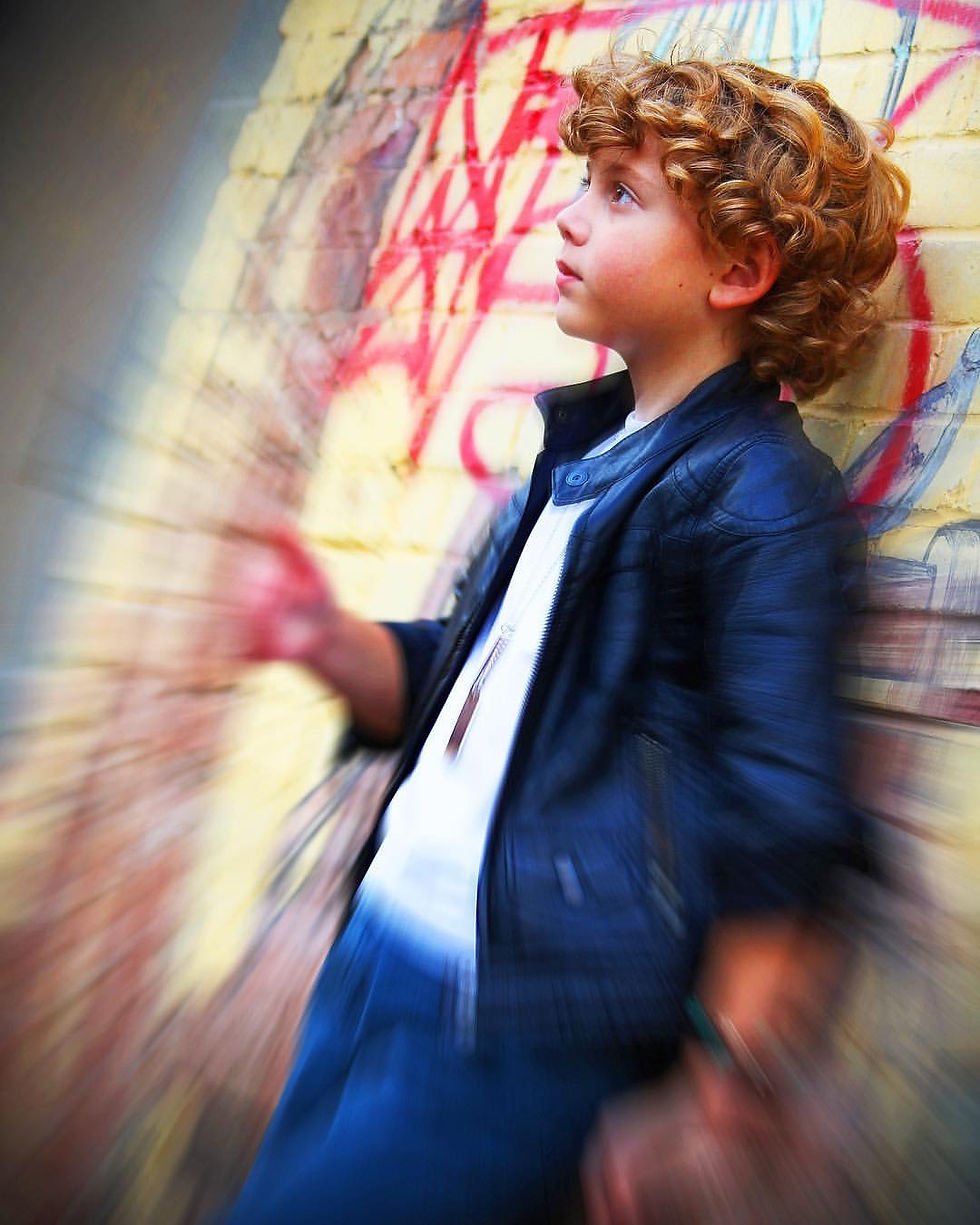
Drew was nine when we officially started doing this work.
And I never expected my strong-willed child to spiral into a pit of despair.
So, I hope you’ll join me for Part 3 where I share how Drew started asking me
a different question which led me to help him start what is now ELF365.
And as Grandad always used to say,
“Now there’s some sense to that.”
Until next time, wishing you much love and laughter,

Comments